Project Report: Glimpse of Our Arabian Getaway!
We as a team have chosen to work on the corpus development project because we are a group of members that share a common aspiration of gaining more and more knowledge about interesting topics we didn’t get the chance to know more about previously. Every member of this group came from a different Arab country (UAE, Lebanon and Jordan), this made the project much more interesting as we all come from different sides of the Oriental!

This corpus development project mainly entails developing an Orientalist spreadsheet based on several metrics such as names of orientalist Authors, the books they wrote and biographical information about the authors. First thing we did was divide the work between us to ensure equal workload and fairness in our work. Initially, we had 238 rows to clean up and add data such as adding links to certain texts, geolocations of a certain author’s birth and death place and even images of the book cover and the author. So we divided these rows equally between us as such:
- Jana: Row 2 to 81
- Yazan: Row 82 to 161
- Serena: Row 162 to 238
After we completed the information needed for each row, we started adding other books written by the authors in our spreadsheet in order to complete the spreadsheet. Our main sources of data were Gutenberg in order to gather information about orientalist books found in the spreadsheet in addition to Google Maps and Wikipedia to gather data about their geo-coordinates and their biographies (Place and date of birth and death…) respectively. In addition, we enriched the spreadsheet further by adding new books that were written by the authors in our spreadsheet whereby our main sources of data were Gutenberg and Internet Archive. Currently, we are working on downloading the new books as plain text and sending them to professor Najla Jarkas as we want to ensure we have helped in every way possible in this course!


Logos of Our Main Sources
With regards to data adjustment, we followed certain guidelines we set ourselves in order to make sure our spreadsheet is organized, coherent, and as standardized as possible. Shown below are the adjustments we made to ensure this:
- In terms of the Author section:
We made sure that the spelling of the authors names is correct as well as the format used (for example: R. M. Ballantyne).

We checked if the hyperlink related to the respective author’s biography is correct if it applies, and if not we searched for a website of the author’s biography and added it as a hyperlink in the spreadsheet.
We also checked if the author has written any other orientalist books that we can add to the spreadsheet to further expand it.
- In terms of the Author Category section:
We determined the category of each author based on his biography stated on Wikipedia or any other biography source. The types of categories that we will be using will be dependent on their profession (for example: Soldier, Missionary) as we eliminated the use of the word Author because it applies to all people mentioned on the spreadsheet. If the Author doesn’t have any other profession, we added “Writer” as a category.

- In terms of the Text Category section:
We agreed on specific genres to describe the books (for example: Fiction, Fantasy, Religion, Travel..) and tried to mention one main text category, thus standardizing the terms used for this section.

4. In terms of Date of Birth/Death section:
We limited ourselves to only mentioning the year of birth and death of the author without specifying the respective month and day because there are many authors with unknown months and days of birth.

5. In terms of the Notes section:
We added notes we found interesting about the respective authors that were not included in the previous columns (for example: Anne Isabella Noel Blunt, 15th Baroness Wentworth was the first European woman to ride through the Arabian desert) and if there was information we couldn’t find about a particular author we mentioned it in the Notes section. Unfortunately, not all the data we want about the authors could be found on the internet, therefore we ended up having some cells in the spreadsheet with “N/A”, meaning no information was found regarding this particular piece of work. However, this didn’t prove to be very problematic as the majority of the information we need was found online!

- In terms of the other group’s spreadsheet:
We were sent another group’s spreadsheet that had a total of 15 authors with columns different than ours for example they added authors’ birthplace and death place images and so on, however we still added these columns to our spreadsheet and expect students to come next semester to complete these new columns for the pre-existing authors to further expand the amazing spreadsheet! We would also suggest they add information regarding the authors’ families and see if by any chance that affected the author’s interest in Orientalism and perhaps students can also search for other Orientalist authors and add them to the spreadsheet.
Note: In terms of the Resources section, we kept it empty as Doctor Najla Jarkas advised us and we hope the next batch of students will be taking over the spreadsheet to make us proud and complete it!
So, the spreadsheet we have worked on is standardized, informative and empty of errors, which will be useful for students to come in the following semesters as they hopefully won’t face any issues when using this data to continue their work!
During our work on this project, we have learned many important things about Orientalists. For example, we noticed that the majority of Orientalists are male and from the United Kingdom as this implies that the UK holds special importance about Orientalism and its different cultures and traditions. It was also fascinating to see how each author had a different perception of the Oriental based on his/her own experiences. Some authors started their writing career at times of war serving in the army and holding positions that required risking their lives to protect their respective countries such as Arthur Griffiths who joined the British Army and fought during the capture of Kinbum, receiving the British Crimea medal. Other authors were prisoners such as Bolesław Prus who was arrested and imprisoned at Lublin Castle for his role in the Uprising and Alan Bott who served in the British Army as a Royal Air Force but was shot down and taken prisoner by the Turks. In addition, the story of Elias Henry Jones blew us away where he was a prisoner that persuaded his Turkish captors he was insane, and after being moved to a hospital for the mentally ill in the summer of 1918, he played his role as a lunatic so successfully that he fooled the doctors and was returned home.
Now, enough of misery and hardship, let’s move on to the joyful experiences!

Let us give a huge round of applause to all female Orientalists who were greatly successful in their writing career at times where female rights were nonexistent! For example, Charlotte Lennox is mostly remembered today as the Author of The Female Quixote, and had a long career in her own right, writing poetry, prose, and drama. It is also interesting to note out women who expressed their orientalist perspectives through magic tales such as Arabella Buckley who saw no contradiction in using fancy to present fact, writing of the natural world: “Can any magic tale be more marvellous, or any thought grander, or more sublime than this?”
Truly inspiring to see such authors succeed!
As for the diverse books they wrote from religion and travel to fiction and poetry, we couldn’t but mention children books we read from a young age being part of our research such as Sindbad the Sailor & Other Stories from the Arabian Nights, Aladdin and the Magic Lamp, or even Ali Baba or the Forty Thieves.
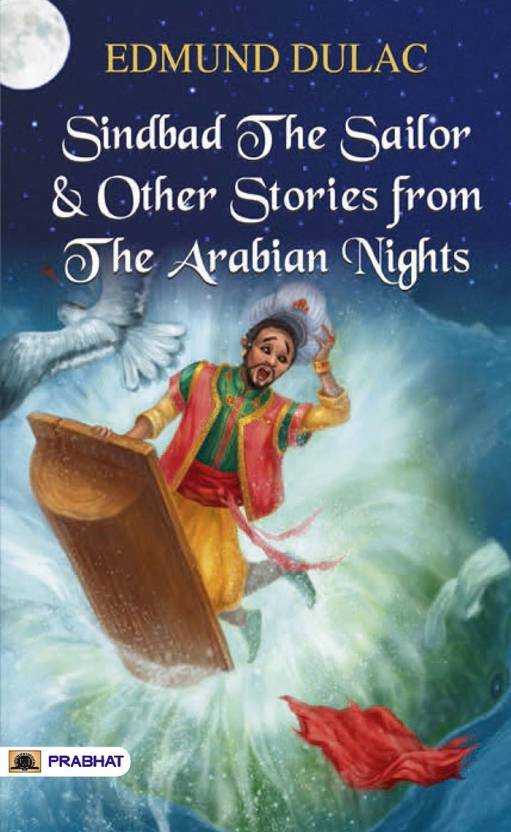
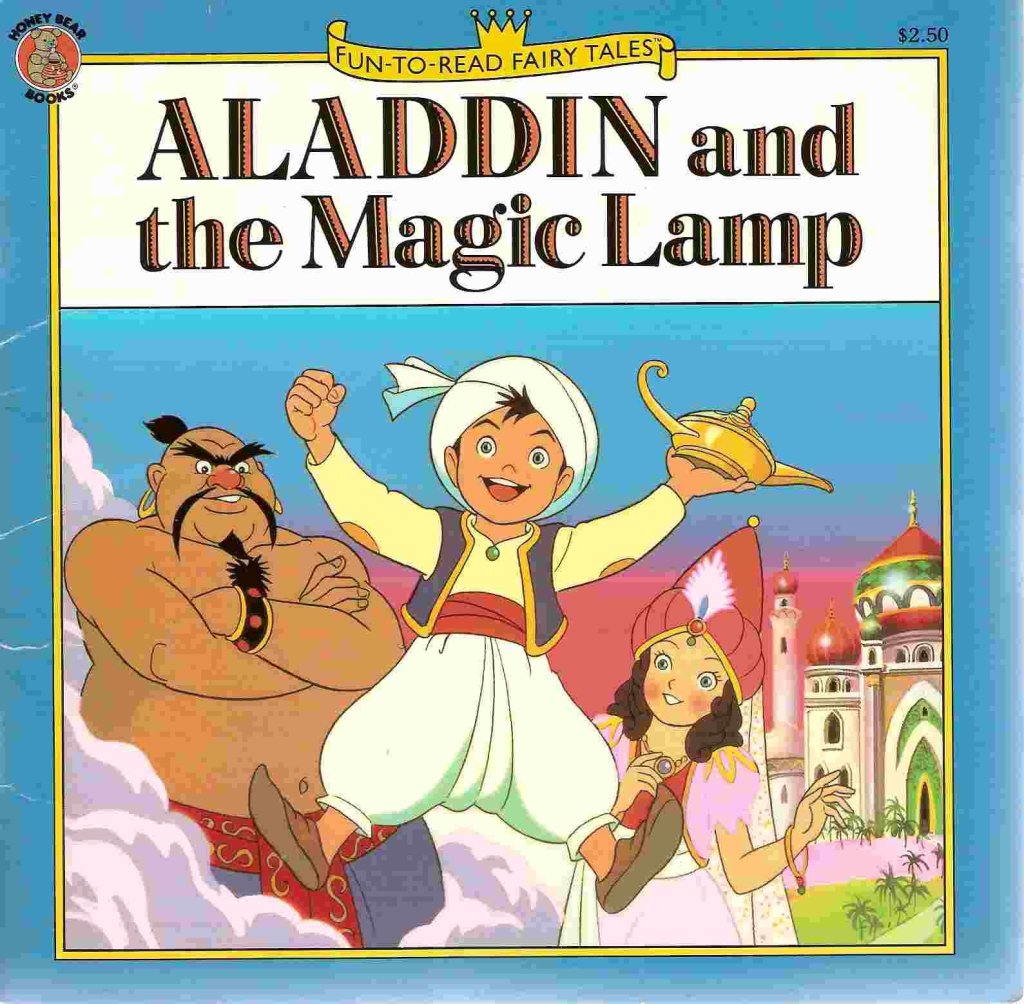
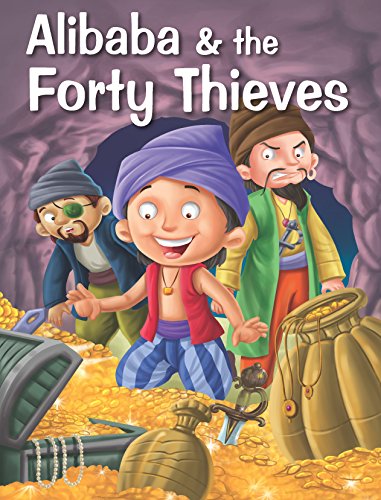
Eventually, such remarkable stories were truly interesting for us and made us see how every Orientalist author views the Oriental differently!
Even though our project is mainly undergoing research about the authors and the books they wrote about, the main bulk of the research was learning about the concept of Orientalism.
Orientalism refers to a way of seeing; however, what we see through this imaginary lens is a created identity of the East from a Western viewpoint where the West misrepresented the East as a means of presenting them as “inferior” and incredibly different. It often involves seeing Arab culture as exotic, backward, uncivilized, and at times dangerous.
This is why Orientalism is important for people to get enlightened about, because it allows us to perceive and understand how others portray us as Arab people and gain a clearer understanding of the different perspectives Orientalists hold of the Arab World. In addition, Orientalism opens our eyes to the diverse thoughts and preconceptions people hold of the Arabs. Hang in there! Let me further explain! A friend of ours comes from an Arab family and currently lives in the U.S. She frequently receives comments about Arab people such as: “Do you live in a desert?”. Such thoughts may arise due to books that portray Arabs as backward and uncivilized. Looking at the bright side, Orientalism gives us a comprehensive view about how do Western people view Arabs whether in a negative or positive manner.
P.S: Edward Said published a book in 1978 in which he coined the term “orientalism” in a very influential way. In his book he develops the Orientalist theory and provides three definitions to the term as well as its implications when it comes to representing the Other. His book allowed us to better understand how the Orientalist authors were depicting the Orient and we believe everyone should read it if they have the time!
It is very sad to have come to the end of our journey with our Orientalists! (wipes tears away). We have learned so many new things about Orientalism that we wouldn’t have learned if we haven’t taken this course. We now understand how important digital humanities are and how it aids people coming from diverse fields with their tasks. Just imagine digital humanities as a superhero capable of doing work beyond human intervention!
Cool Right?
Finally, we would like to extend our thanks to professor Najla Jarkas who assisted us all the way despite the unusual semester given the ongoing pandemic. We as a group truly appreciate all the hard work professor Najla has done!
Goodbye and stay safe!

/9eM1SWnqjrc40/giphy.gif
This report was done in collaboration with Serena Faris, Jana Kobrolsi, and I.
References of images:
https://cdn.countryflags.com/thumbs/lebanon/flag-400.pngh
https://cdn.webshopapp.com/shops/94414/files/52385814/flag-of-jordan.jpgh
https://cdn.webshopapp.com/shops/94414/files/52441766/flag-of-the-united-arab-emirates.jpgh
https://sfhistorydays.org/wp-content/uploads/2016/01/Internet_Archive_logo_and_wordmark_black.jpgh
https://upload.wikimedia.org/wikipedia/commons/5/53/Wikipedia-logo-en-big.pngh
https://images-na.ssl-images-amazon.com/images/I/5103OlHcClL.jpgh
https://images-na.ssl-images-amazon.com/images/I/71e4C1ledPL.jpgh
 Yazan's Blog